


What Emotional Injuries Can Occur After a Car Accident?
| Emotional Injury | Common Effects |
|---|---|
| Anxiety | Fear, nervousness, worry |
| Depression | Loss of enjoyment, isolation |
| PTSD | Flashbacks, nightmares, panic |
| Driving Anxiety | Fear of driving or riding in vehicles |
| Sleep Disturbances | Insomnia, interrupted sleep |
| Panic Attacks | Sudden episodes of intense fear |
| Emotional Trauma | Difficulty functioning normally |
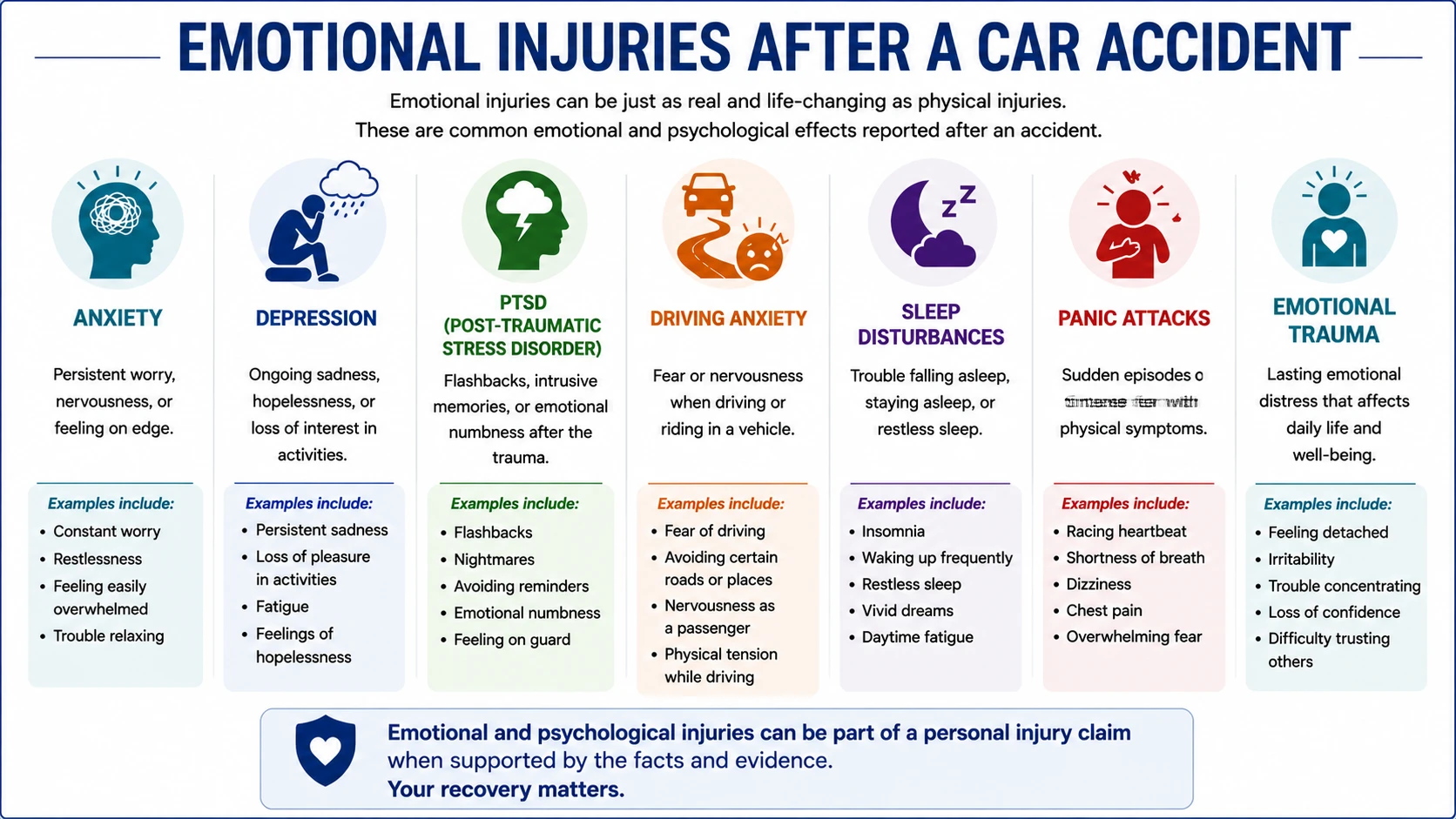
Emotional and psychological injuries can be part of a personal injury claim when supported by the facts and evidence. Your recovery matters.
Can I Be Compensated for Emotional Distress After a Car Accident?
Emotional distress claims can sometimes be just as important, or even more important, than physical injury claims.
Imagine being trapped inside a vehicle after a collision while fuel is pouring onto the roadway. Imagine believing that the vehicle could catch fire at any moment. A person may walk away with a broken hand, but the emotional trauma of believing they were about to be burned alive can remain with them for years.
That type of fear, anxiety, and post-traumatic stress can have a tremendous impact on a person’s life. Both injuries matter. And when the evidence supports them, both should be part of how we evaluate what that accident has taken from you.
Why Are Emotional Injuries Often Misunderstood?
Physical injuries are often easier for people to understand because they can be seen on an X-ray, MRI, or other diagnostic test. Emotional injuries are different. They are often invisible.
Although society has made tremendous progress in understanding depression, anxiety, PTSD, and other psychological conditions, many people still struggle to relate to experiences they have never personally endured.
That is why our firm believes these cases must be presented in a way that helps jurors understand the real impact emotional injuries have on a person’s daily life.
What Does "Emotional Distress" Mean in a South Carolina Car Accident Case?
Emotional distress is not just being upset that an accident happened.
A serious collision can affect the way you sleep, work, drive, interact with your family, and experience everyday life. You may have nightmares about the crash. You may panic when another vehicle gets too close. You may avoid the intersection where the accident happened. You may stop doing things you enjoyed because you are afraid of getting hurt again.
South Carolina law recognizes mental anguish and emotional effects as potential components of damages in personal injury cases when supported by the facts and evidence. Loss of enjoyment of life may also be considered when an injury limits your ability to participate in and enjoy normal activities.
The question is not simply whether you felt upset. The question is what the accident actually did to your life and whether we can prove it.
Do Insurance Companies Take Emotional Distress Claims Seriously?
Insurance companies may question or minimize emotional injuries, particularly because those injuries can be harder to document than a broken bone or surgical scar.
Remember, the insurance company does not represent you. Its representatives evaluate the claim from the company’s perspective. Our job is to develop evidence that shows what the accident actually did to you.
How Do You Prove Emotional Distress After a Car Accident?
The first reason to get treatment is your health, not your lawsuit.
If you’re experiencing anxiety, depression, panic attacks, nightmares, driving fear, PTSD symptoms, or other psychological problems after an accident, tell your medical providers what is happening. Get the help you need.
Treatment may also create important evidence documenting when your symptoms began, what you reported, your diagnosis, the treatment you received, and how the condition has affected your life.
At our law firm, we strongly believe people should seek treatment from qualified professionals who can diagnose the condition, develop a treatment plan, and help document the impact of the injury.
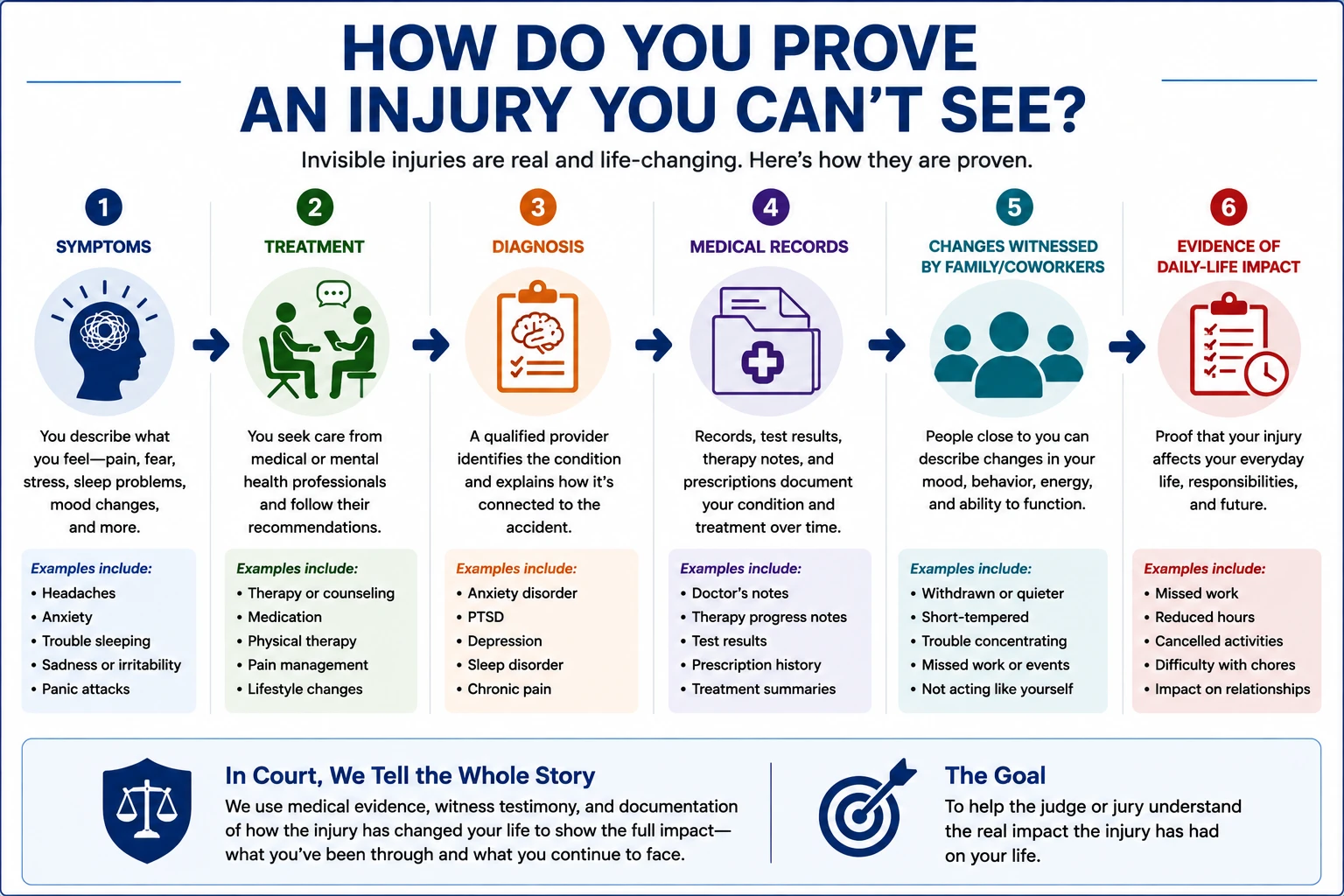
In court, we tell the whole story, using medical evidence, witness testimony, and documentation to show the real impact the injury has had on your life.
What Emotional Injuries Are Most Common After a Car Accident?
Psychological injuries can take many different forms.
We frequently see depression and anxiety when someone can no longer enjoy their hobbies, participate in family activities, or return to work as they did before the accident.
We also see significant driving anxiety after serious collisions. Some clients become fearful of highways, intersections, or even getting behind the wheel at all.
PTSD is another common issue. People may repeatedly relive the accident, experience nightmares, suffer panic attacks, or struggle with ongoing fear related to the event.
These injuries are real, and we take them seriously.
What Do Emotional Distress Claims Look Like in Real Life?
Whether it is fear of driving after a major collision or fear of being injured again after a traumatic event, emotional injuries are incredibly common following serious accidents.
We have represented many clients who experienced anxiety, depression, PTSD, and other emotional injuries after suffering significant physical injuries. While the details of every case are different, one thing remains consistent: emotional injuries often have a profound effect on a person’s quality of life.
Our firm works hard to develop evidence that helps both insurance companies and juries understand the true impact of these injuries.
How Can Emotional Trauma Affect Work, Family, and Daily Life?
Emotional injuries often affect every aspect of a person’s life.
We regularly see people become withdrawn from family and friends. Activities they once enjoyed are abandoned. Relationships suffer. Work performance declines. Some people isolate themselves because they no longer feel like the person they were before the accident.
Unfortunately, isolation often makes the situation even worse.
At our law firm, we believe these damages are real and deserve to be taken seriously. Just because an injury cannot be seen does not mean it should be ignored.
What Evidence Is Most Helpful in Emotional Distress Cases?
There are many forms of evidence that can help prove emotional distress damages.
The injured person’s testimony is important. Testimony from family members, friends, coworkers, and others who have observed changes in behavior can also be very powerful.
However, in nearly 30 years of experience, some of the most compelling evidence comes from qualified mental health professionals, including psychologists and psychiatrists who have evaluated and treated the injured person.
Their opinions often help explain the diagnosis, treatment, prognosis, and long-term effects of the emotional injuries.
Do I Need a Serious Physical Injury to Recover for Emotional Distress?
Not every emotional distress claim works the same way.
If you were physically injured in a car accident, the emotional consequences of that accident may be considered along with your other damages. The severity of the physical injury is not the only thing that matters. The evidence showing how the accident actually affected you matters too.
South Carolina also recognizes a much narrower cause of action involving emotional distress suffered by certain bystanders who witness serious injury or death to a close relative. Different legal requirements apply to those cases.
That is why the facts matter. We need to understand what happened to you, what you experienced, what symptoms developed, and what evidence supports those injuries.
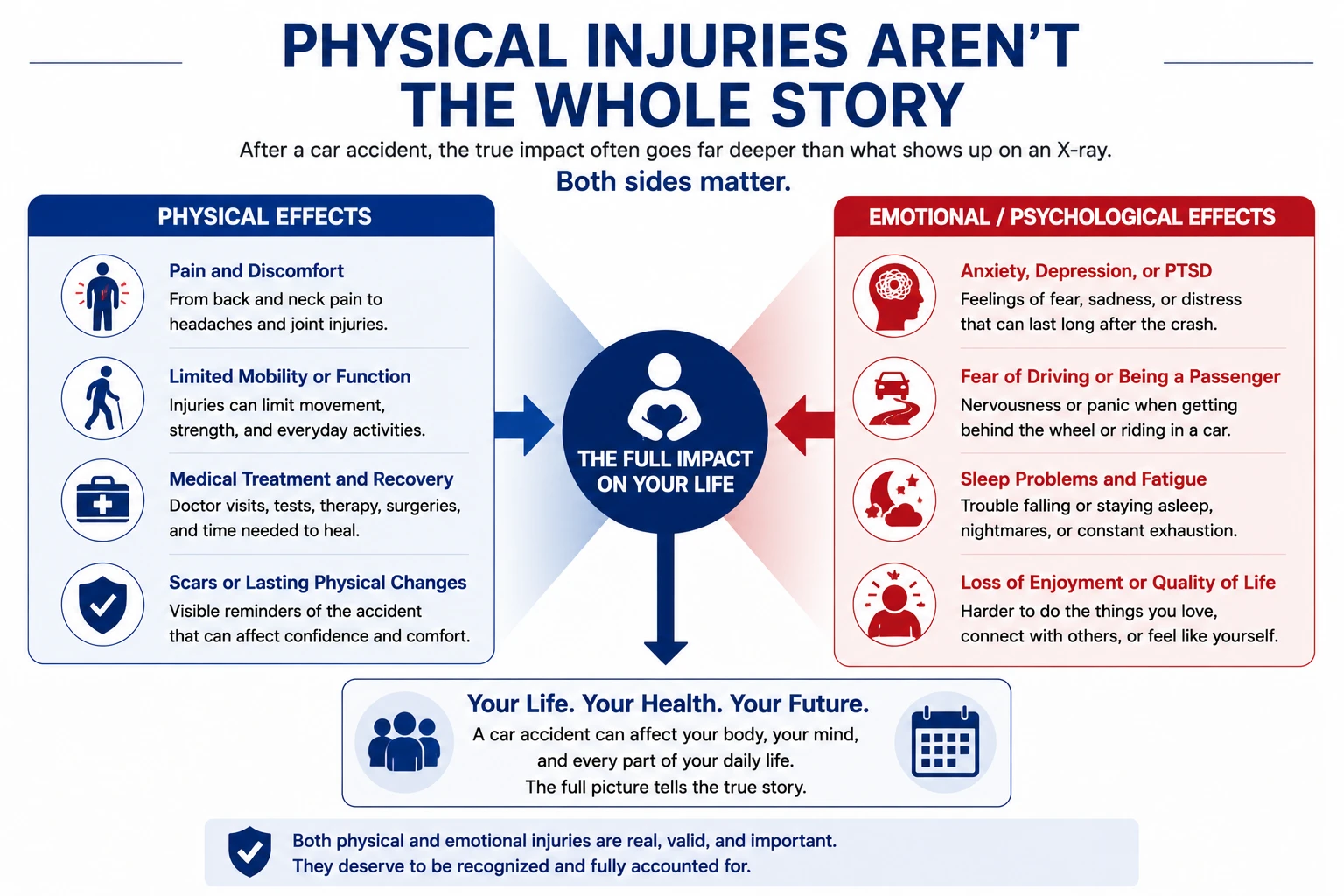
Both physical and emotional injuries are real, valid, and important. They deserve to be recognized and fully accounted for.
What Makes an Emotional Distress Claim Strong?
Some of the strongest evidence can come from qualified medical and mental-health professionals who actually evaluated and treated the injured person.
A qualified psychologist or psychiatrist who has evaluated and treated the injured person can provide powerful testimony regarding diagnosis, causation, treatment, and prognosis.
When that expert testimony is combined with medical records, treatment history, and testimony from the injured person and those closest to them, it can create a compelling picture of how the emotional injuries have affected the person’s life.
Are Emotional Distress Cases Difficult to Prove in South Carolina?
One of the biggest challenges in South Carolina emotional distress cases is helping jurors understand injuries they cannot physically see.
It is one thing to show a broken bone on an X-ray. It is something entirely different to demonstrate anxiety, depression, PTSD, or emotional trauma.
That is why our firm has spent years developing strategies for presenting psychological injuries in a way that jurors can understand and appreciate. We believe these injuries deserve the same level of attention and consideration as physical injuries.
Do I Need to See a Therapist or Psychologist to Prove Emotional Distress?
Not necessarily. Every case is different, and there is no absolute rule that says you must see a therapist, psychologist, or psychiatrist in order to bring a claim for emotional distress. However, treatment records from qualified professionals can provide important evidence of psychological injuries.
The reality is that it can be much easier to document anxiety, depression, post-traumatic stress disorder, or other emotional injuries when there are treatment records and opinions from qualified medical or mental-health professionals supporting those conditions.
More importantly, seeking treatment is not just about proving a case, it’s about helping you recover. If you are experiencing emotional distress after an accident, you should not ignore it or try to simply push through it. Psychological injuries are real. They deserve to be recognized, diagnosed, and treated. Getting the right treatment is often one of the most important steps you can take for both your recovery and your case.
What if I Already Had Anxiety, Depression, or PTSD Before the Accident?
Having a pre-existing psychological condition does not necessarily mean the accident had no effect on your mental health.
The important question is what changed. Were your symptoms controlled before the collision? Did they become more severe afterward? Did you need additional treatment or medication? Did driving anxiety develop after the crash? Did the accident trigger symptoms you had not experienced in years?
Be honest with your doctors and your lawyer about your prior history. If a pre-existing condition is not disclosed and comes out later, it can create credibility problems. Medical records showing what you were like before and after the accident may help us understand what actually changed.
How Do You Show a Jury an Injury They Cannot See?
This is where developing the evidence matters.
Medical records and testimony from treating professionals can be important. But sometimes the people who know you best can explain the change in ways a medical chart cannot.
Your spouse may explain that you no longer sleep through the night. A coworker may describe how you became anxious or withdrawn after returning to work. Your children may notice that you no longer take them places because you’re afraid to drive.
Photographs, calendars, journals, employment records, medication records, and other evidence may also help depending on the case.
Our job as trial lawyers is to take something the jury cannot see on an X-ray and help them understand what it has actually done to your life.
What Should I Do if I'm Experiencing Emotional Distress After a Car Accident?
If you are experiencing emotional or psychological symptoms after a car accident, do not ignore them.
Anxiety, depression, nightmares, panic attacks, driving fear, PTSD, sleep problems, and other emotional injuries can have a real impact on your health, your family, your work, and your daily life.
The first thing we want you to do is get the treatment you need. Tell your medical providers honestly about what you are experiencing and how your life has changed since the accident.
Then, if someone else caused the accident, talk with an experienced South Carolina personal injury lawyer about how those emotional injuries may fit into your car accident claim.
How to Protect an Emotional Distress Claim
- Seek treatment if symptoms develop
- Discuss symptoms honestly with providers
- Follow treatment recommendations
- Keep records of appointments
- Document how symptoms affect daily life
- Preserve medical records
- Avoid minimizing symptoms
- Consult an experienced trial lawyer
In Summary
Yes. Emotional and psychological injuries can be part of the damages in a South Carolina car accident claim when supported by the facts and evidence. Anxiety, depression, PTSD, driving fear, sleep problems, mental anguish, and loss of enjoyment of life may significantly affect an injured person’s daily life. Treatment records, medical and mental-health professionals, testimony from family and friends, and other evidence may help document those effects. A separate claim for negligent infliction of emotional distress is different and has specific requirements under South Carolina law.