


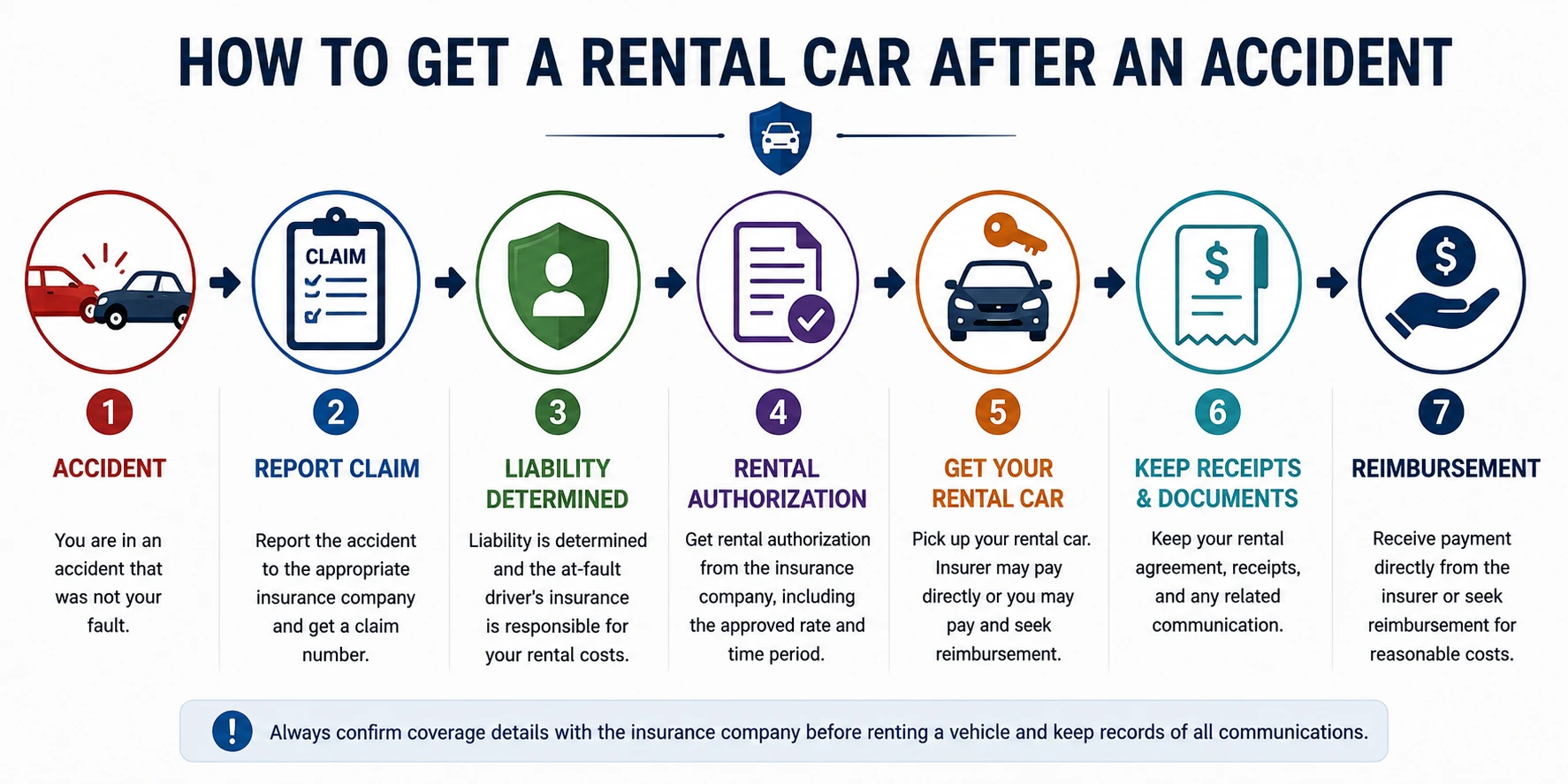
What Steps Should I Take to Get a Rental Car After an Accident?
- Report the accident to the appropriate insurance company. Provide the basic accident information and obtain a claim number.
- Determine which insurance coverage may apply. Depending on the circumstances, you may seek rental expenses through the at-fault driver's liability coverage or potentially through applicable rental reimbursement coverage under your own policy.
- Ask the adjuster to confirm rental authorization in writing. Find out whether the insurer will arrange direct billing or expects you to pay first and request reimbursement.
- Confirm the approved daily rate and rental period. Do this before signing the rental agreement.
- Choose a reasonable rental vehicle. Avoid unnecessary upgrades unless the insurer has agreed to them.
- Keep all rental agreements and receipts. Preserve proof of every out-of-pocket transportation expense.
- Document delays or denials. Save emails and messages and make notes of conversations with adjusters.
- Track when your vehicle is repaired or declared a total loss. Rental reimbursement may be disputed once repairs are complete or after the insurer makes a total-loss settlement offer.
- Challenge unreasonable denials or limitations. If liability, rental duration, vehicle type, or reimbursement becomes disputed, consider getting legal advice.
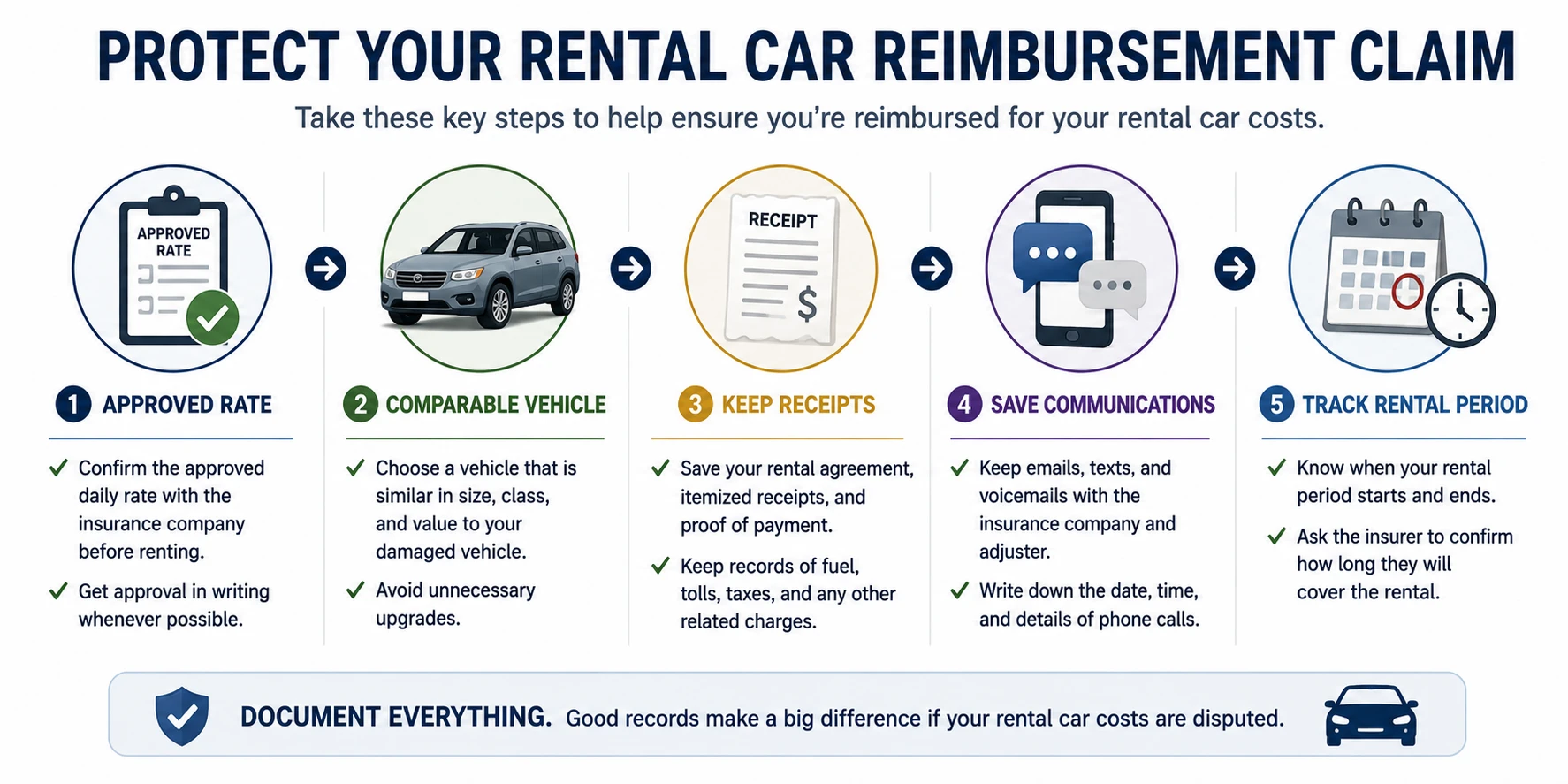
Documenting everything, from the approved rate to your rental period, makes a big difference if your rental car costs are disputed.
What May Happen With Your Rental Car Claim?
| Situation | What May Happen |
|---|---|
| Other driver clearly at fault | Rental may be covered |
| Liability disputed | Rental benefits may be delayed |
| Insurance pays directly | Rental company is paid |
| You pay out of pocket | Reimbursement may be sought |
| Comparable vehicle available | Better chance of approval |
| Luxury upgrade chosen | Additional costs may be disputed |
| Receipts preserved | Easier to prove damages |
What Does "Loss of Use" Mean After a Car Accident?
Loss of use generally refers to the inability to use your vehicle because it was damaged in an accident. Rental-car expenses can be one way of measuring that loss while the vehicle is being repaired or replaced. The specific amount and period that may be recoverable depend on the facts of the claim.
What Do Most People Get Wrong About Rental Car Claims?
1. Assuming every rental expense will automatically be reimbursed.
The insurer may dispute the daily rate, vehicle class, or rental duration.
2. Assuming you can rent any vehicle you want.
Reasonableness matters. Luxury upgrades or substantially more expensive vehicles may create reimbursement disputes.
3. Assuming coverage continues indefinitely.
Rental authorization may end when repairs are completed or after a total-loss settlement process reaches a certain stage.
A common dispute involves the type of replacement vehicle the insurance company will approve. If you were driving a pickup truck, SUV, or larger family vehicle, you may want a reasonably comparable rental rather than a compact economy car. However, insurers may dispute whether a larger or more expensive vehicle is necessary and reasonable under the circumstances.
What Happens If the Insurance Company Refuses to Pay for a Rental Car?
In our experience representing injured people in South Carolina, we have handled cases where an insurer refused to provide a rental vehicle or delayed approval. In some situations, our clients had no choice but to pay for a rental car out of their own pocket while waiting for the insurance company to act.
If the insurer refuses to authorize a rental vehicle, ask for the reason for the denial in writing and preserve documentation of any rental or transportation expenses you pay yourself. If liability, coverage, or reimbursement remains disputed, a personal injury lawyer may be able to evaluate the insurer’s position and explain the available options.
Can a Lawyer Help Resolve a Rental Car Dispute?
In one case our firm handled, a dispute over rental assistance was one of several unresolved issues before litigation began. After the lawsuit was filed, the insurer changed its position and provided the rental benefits the client had been requesting. The outcome of any case depends on its facts, but the example illustrates how unresolved property-damage issues can sometimes continue alongside the larger injury claim.
What Should I Do If the Insurance Company Delays My Rental Car?
If rental authorization is being delayed, first ask the adjuster to identify the specific reason for the delay. Find out whether the insurer is still investigating liability, waiting for documentation, disputing coverage, or requiring additional information before approving the rental.
Keep a written record of your communications with the insurance company, including the dates of calls, emails, documents submitted, and any explanations the adjuster provides. If you are paying for transportation or a rental vehicle yourself, preserve all receipts and proof of payment.
If the delay continues after you have provided the requested information, ask whether the issue can be reviewed by a supervisor or claims manager. If liability, coverage, or reimbursement remains disputed, consider speaking with a personal injury lawyer about the available options.
What Are Common Rental Car Reimbursement Mistakes?
One of the biggest mistakes is assuming the insurance company will automatically reimburse any rental vehicle expense, regardless of the cost.
Sometimes people rent luxury vehicles or upgrade to vehicles that significantly exceed what the insurance company is willing to pay for on a daily basis. That often creates disputes later.
Before entering into a rental agreement, confirm exactly what the insurance company has agreed to pay, including the daily rate, approved vehicle class, and authorized rental period. If you choose a more expensive vehicle than the insurer has authorized, you may become responsible for some or all of the additional cost.
Who Pays for the Rental Car After an Accident?
Rental car expenses may be handled in several different ways.
In some cases, the at-fault driver’s insurance company will arrange and pay for the rental vehicle directly. In other cases, the injured person may need to pay for the rental car upfront and later seek reimbursement as part of the damages claim.
Every situation is different. The availability of rental coverage often depends on liability, insurance coverage, and the position taken by the insurance company. If you are forced to pay rental expenses out of pocket because of an accident that was not your fault, those costs may become part of the damages pursued against the responsible party.
| Possible Source | How It May Work |
|---|---|
| At-fault driver's insurer | May authorize and pay reasonable rental expenses if liability is accepted |
| Your own insurer | Rental reimbursement coverage may apply if included in your policy |
| You initially | You may pay out of pocket and later seek reimbursement |
| Responsible party | Reasonable loss-of-use expenses may potentially become part of the damages claim |
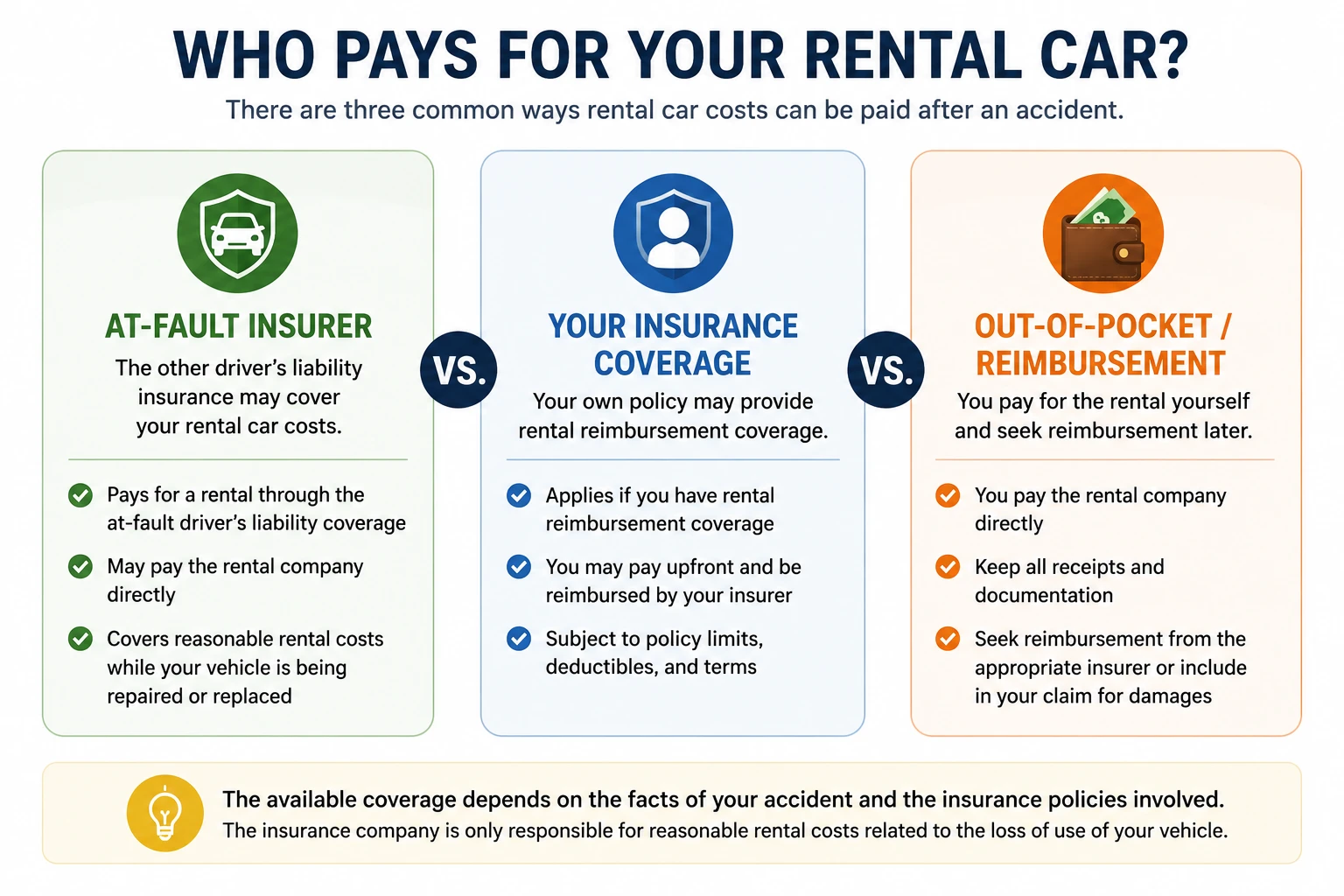
The available coverage depends on the facts of your accident. The insurance company is only responsible for reasonable rental costs related to the loss of use of your vehicle.
How Do Insurance Companies Try to Limit Rental Car Benefits?
Insurance companies may limit rental benefits by disputing liability, restricting the daily rental rate, limiting the approved rental period, or challenging the type of replacement vehicle requested.
In some cases, they deny liability altogether. If they deny responsibility for the accident, they frequently refuse to provide rental car assistance.
In other cases, they attempt to limit the daily rental allowance or shorten the amount of time the rental vehicle will be covered. We also commonly see attempts to place people in the least expensive vehicle possible, even when a larger or more comparable vehicle would be more appropriate.
What Should I Know About Rental Cars, Receipts, and Insurance Adjusters?
Documentation can become important if the insurance company later disputes the cost or duration of your rental vehicle.
Keep the rental agreement, itemized receipts, proof of payment, and any written authorization from the insurance company. Save emails and text messages with the adjuster, and make notes of important telephone conversations, including the date, time, person you spoke with, and what was discussed.
You should also preserve written confirmation of the approved daily rental rate, vehicle class, authorization date, and the date the insurer says rental coverage will end. If you pay transportation expenses out of pocket, keep documentation of those costs as well.
Good records can make it much easier to establish what the insurer authorized, what you actually paid, and why the expenses were incurred if reimbursement is later disputed.
Can I Rent a Larger Vehicle After an Accident?
Maybe. Whether a larger rental vehicle is reasonable can depend on the vehicle you were driving before the accident and your transportation needs. For example, if you were driving a pickup truck, SUV, or larger family vehicle, a small economy car may not provide reasonably comparable transportation.
Before renting a larger or more expensive vehicle, ask the insurance company to confirm in writing the vehicle class and daily rate it has authorized. If you choose a vehicle that exceeds those limits without prior approval, the insurer may dispute the additional cost. If the approved vehicle does not reasonably meet your transportation needs, document why a different vehicle is necessary and ask the adjuster to reconsider the authorization.
How Can I Get the Insurance Company to Move Faster?
You may be able to reduce avoidable delays by providing the insurance company with the information it needs to evaluate the rental request as early as possible. This may include the claim number, accident report information, vehicle location, repair estimate, photographs, and other requested documentation.
Ask the adjuster whether liability has been accepted, whether the rental has been authorized, what daily rate and vehicle class have been approved, and when the authorization begins and ends. Request important decisions and rental authorization in writing whenever possible.
If the insurer says additional information is required, ask specifically what is missing and provide it promptly. Keep track of unanswered calls, delayed responses, and documents you submit so there is a clear record of the claim’s progress.
If the process remains stalled despite providing the requested information, consider asking for supervisory review or seeking legal advice.
How Long Will Insurance Pay for a Rental If My Car Is Totaled?
If your vehicle is declared a total loss after a South Carolina car accident, the insurance company may not continue paying for a rental vehicle indefinitely. The amount of time rental expenses are covered can depend on the circumstances of the claim, the available insurance coverage, and where you are in the total-loss process.
A common point of dispute occurs after the insurance company determines that the vehicle is a total loss and makes a settlement offer. The insurer may take the position that its responsibility for rental expenses ends shortly after an offer is made, even though you may still be trying to evaluate the offer, resolve questions about the vehicle’s value, or arrange replacement transportation.
For that reason, do not assume that rental coverage will continue until you purchase another vehicle. Ask the insurance adjuster to confirm in writing the date rental authorization will end and whether any additional rental expenses will be reimbursed.
If you disagree with the insurer’s valuation of your vehicle, keep records of the total-loss offer, vehicle valuation, rental agreement, receipts, and all communications concerning the rental deadline. A dispute over the value of the totaled vehicle does not necessarily mean the insurer will automatically extend rental benefits while that dispute is being resolved.
The important point is that there is not one rental period that applies to every total-loss claim. The facts of the accident, applicable insurance coverage, timing of the total-loss determination, settlement process, and reasonableness of the rental period can all matter.
In Summary
If another driver caused your South Carolina accident, reasonable rental-car expenses may be recoverable as part of your loss-of-use or property-damage claim. Payment may come directly from the at-fault driver’s insurer, through applicable rental reimbursement coverage under your own policy, or through later reimbursement of reasonable out-of-pocket expenses. Confirm the approved rental rate and duration whenever possible, keep your receipts, and document communications with the insurer.