

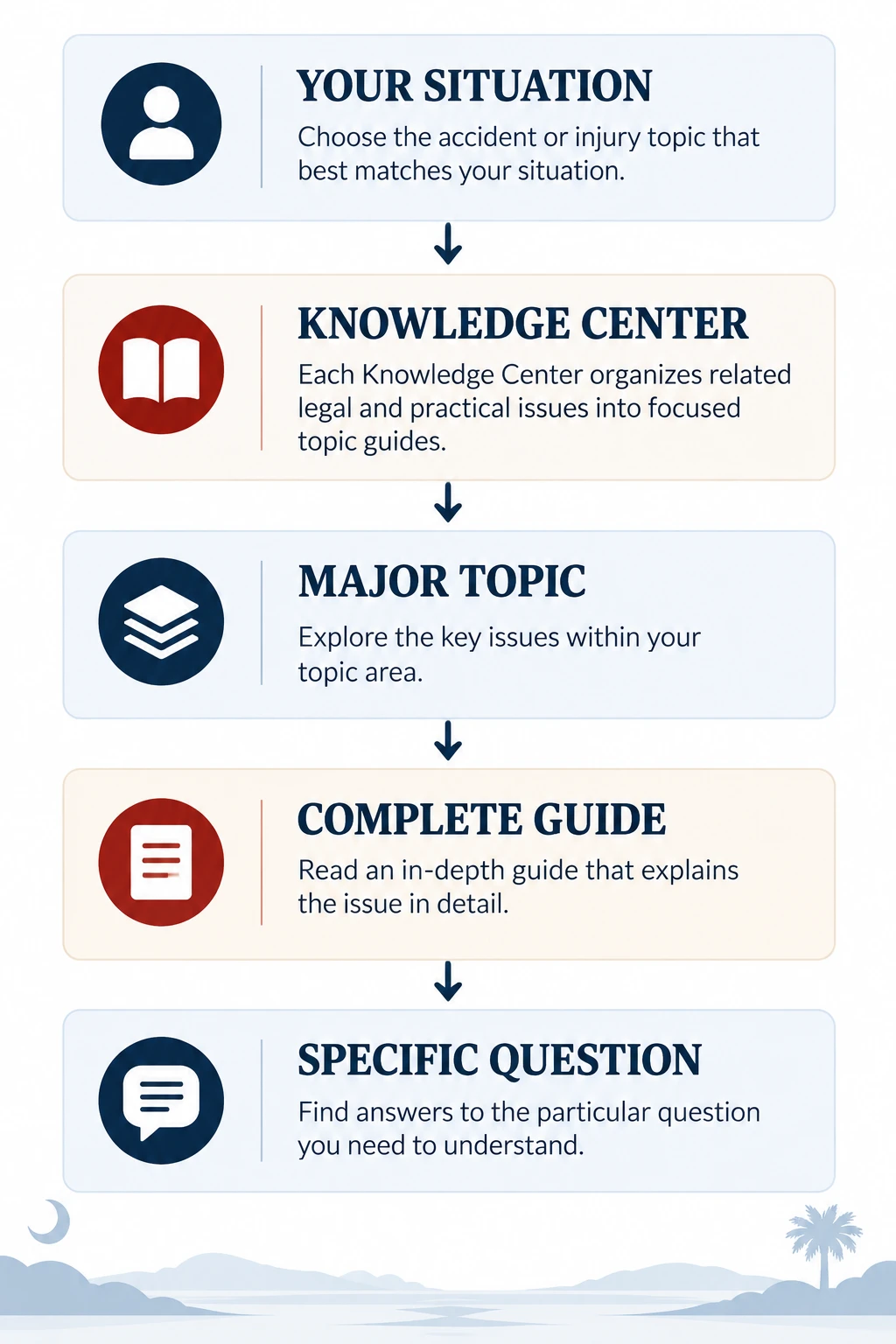
What Litigation Issue Are You Dealing With?
You do not need to understand the entire litigation process at once. Start with the question that most closely matches where you are now.
I want to know how long I have to file a car accident lawsuit in South Carolina.
Learn how South Carolina’s filing deadline may affect a car accident lawsuit, why the applicable time limit can depend on the circumstances, and why waiting too long can affect your ability to pursue a claim.
I want to know how long a car accident lawsuit may take
There is no single timeline that applies to every lawsuit. The issues being disputed, amount of discovery, number of parties, medical and expert issues, motions, court scheduling, settlement discussions, and other circumstances can affect how a case develops.
I have questions about giving a deposition
A deposition involves answering questions under oath before trial. It is an important part of discovery and can address the accident, injuries, treatment, damages, prior statements, and other issues relevant to the case.
Is It Ever Too Late to Hire a Lawyer for an Old Accident?
Learn whether it may still be possible to hire a lawyer after time has passed since a car accident, what deadlines and claim developments may matter, and why the circumstances of the individual case can affect the available options.
Should I Hire a Lawyer for a Rear-End Accident in South Carolina?
Learn when legal representation may be useful after a rear-end accident, including how injuries, disputed fault, insurance issues, evidence, and the overall complexity of the claim can affect that decision.
What's the Difference Between a Property Damage and Injury Claim?
Learn how property damage and bodily injury claims address different losses after a car accident, why they may be handled separately, and what resolving one claim may mean for the other.
How Can a South Carolina Car Accident Lawsuit Develop?
Litigation can involve many procedural details, but the overall process is easier to understand when it is broken into stages.
Not every lawsuit follows exactly the same path, and some cases resolve before reaching later stages.
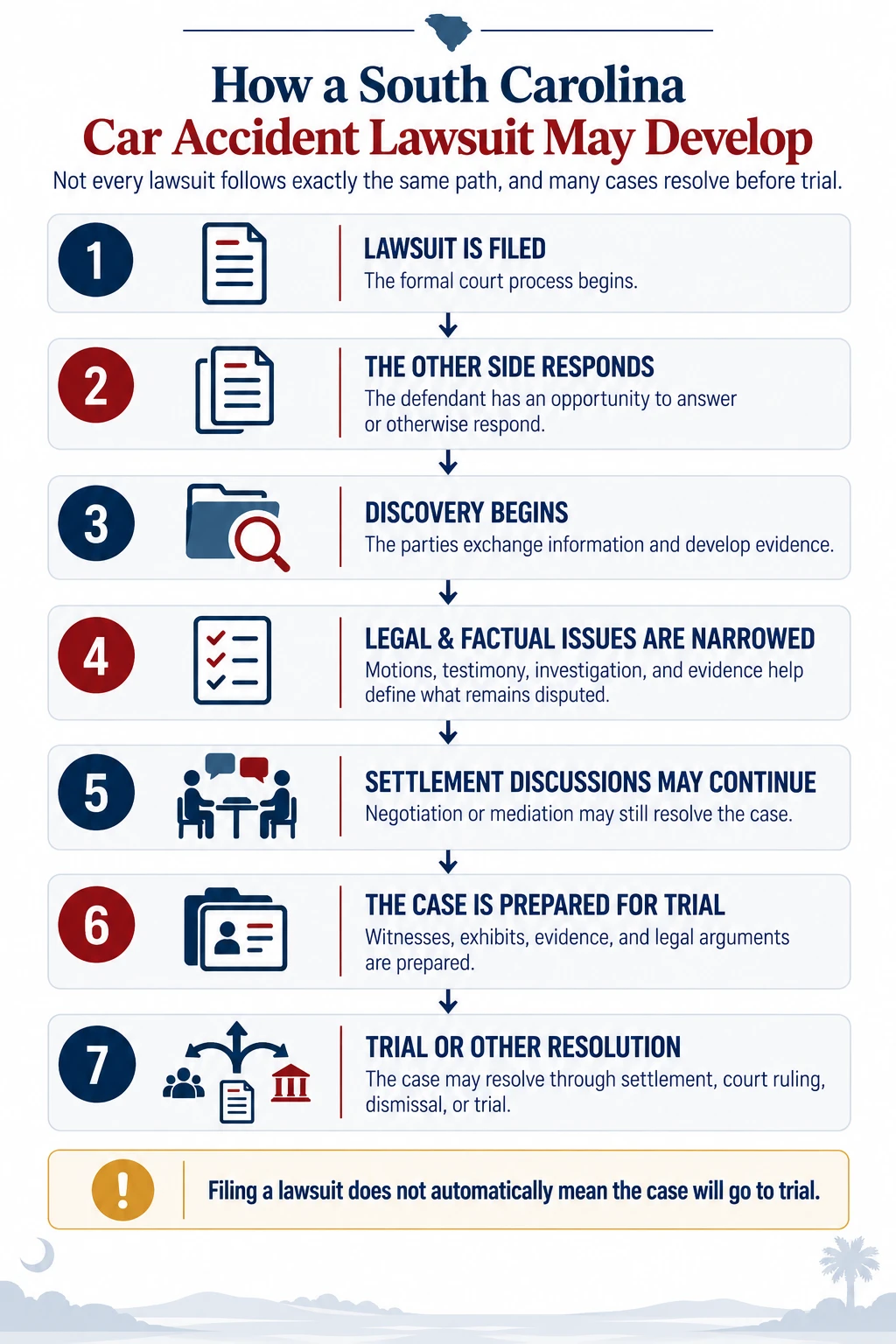
Not every lawsuit follows exactly the same path, and many cases resolve before trial.
1. The Lawsuit Is Filed
A lawsuit generally begins when a complaint is filed with the appropriate court.
The complaint identifies the parties and sets out the claims being asserted. Filing moves the dispute from the insurance-claim process into formal litigation.
2. The Other Side Responds
After the lawsuit and required documents are properly served, the defendant has an opportunity to respond.
That response may include an answer addressing the allegations and asserting defenses. Other procedural responses may also be available depending on the circumstances.
3. Discovery Begins
Discovery allows the parties to obtain information and evidence relevant to the disputed issues.
It may include written questions, document requests, depositions, and other permitted methods of obtaining relevant information
4. Legal and Factual Issues Are Narrowed
As information is exchanged, the parties may develop a clearer understanding of what is actually disputed.
Motions, discovery issues, additional investigation, witness testimony, and expert evidence where appropriate may further define the legal and factual questions that remain.
5. Settlement Discussions May Continue
Filing a lawsuit does not automatically end negotiation.
The parties may continue discussing settlement as new information becomes available. Mediation may also provide a structured opportunity to explore whether the dispute can be resolved without trial.
6. The Case Is Prepared for Trial
If the case remains unresolved, the attorneys prepare to present the disputed issues at trial.
Preparation may involve witnesses, exhibits, medical evidence, expert testimony where appropriate, legal arguments, evidentiary issues, and other materials necessary to present or defend the case.
7. Trial or Other Resolution
A lawsuit does not have only one possible ending.
Depending on the case, it may resolve through settlement, dismissal, a court ruling, trial, or another legally available resolution.
Four Questions That Can Affect a Car Accident Lawsuit
Litigation is easier to understand when you separate four questions that may shape how the case develops.
These questions are connected, but they address different parts of the dispute.
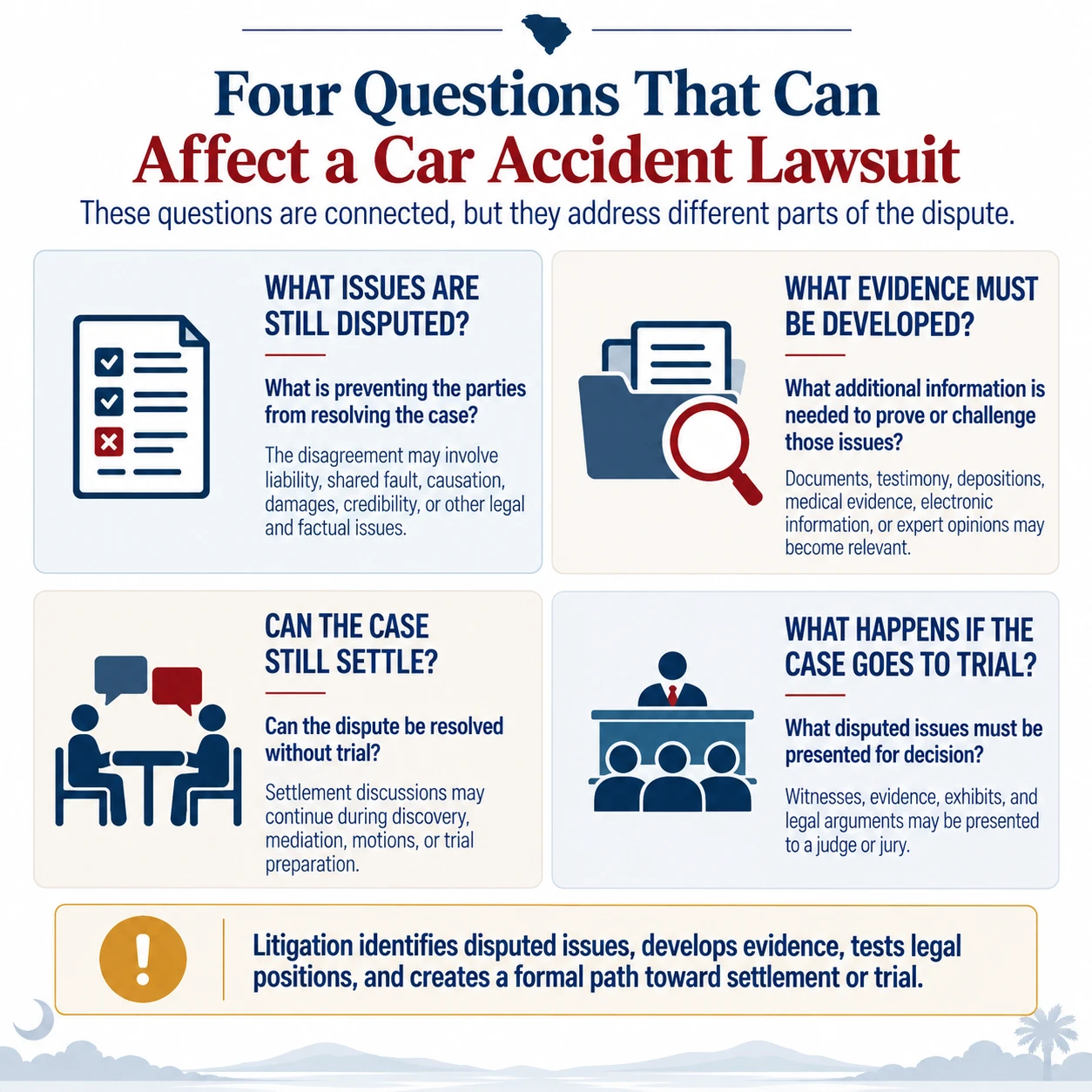
These questions are connected, but they address different parts of the dispute.
What Issues Are Still Disputed?
What is preventing the parties from resolving the case?
The disagreement might involve who caused the collision, whether the injured person shares responsibility, whether the crash caused particular injuries, the extent of the damages, the credibility of witnesses, or other legal and factual issues.
Identifying the actual dispute helps define what litigation needs to address.
What Evidence Must Be Developed?
What additional information is needed to prove or challenge the disputed issues?
Documents, photographs, medical evidence, testimony, depositions, electronic information, expert opinions, or other evidence may become relevant depending on the case.
Discovery provides a formal process for developing much of that information.
Can the Case Still Settle?
Can the parties resolve the dispute without asking a judge or jury to decide it?
Settlement discussions can continue after litigation begins. Discovery, depositions, motions, mediation, and other developments may affect how each side evaluates the case.
Filing suit and pursuing settlement are not mutually exclusive.
What Happens if the Case Goes to Trial?
Which disputed issues will need to be presented for decision?
If the case does not resolve, the parties prepare the admissible evidence, witnesses, exhibits, and legal arguments necessary to present their positions at trial.
Litigation identifies the disputed issues, develops the evidence, tests legal positions, and creates a formal path toward settlement or trial.
Start With Our Complete Lawsuit and Trial Guide
This guide explains the larger litigation system. The page you’re currently on can help you with the stage you are trying to understand.
The South Carolina Car Accident Lawsuit Process
This guide explains what may happen after a car accident lawsuit is filed, including pleadings, discovery, depositions, motions, mediation, settlement discussions, pretrial preparation, and possible trial.
Use it for a complete overview of how a claim can move through formal litigation.
Common Lawsuit and Litigation Questions
If you already know which part of litigation concerns you, these resources address more specific questions.
Discovery & Depositions
What Happens During a Deposition?
A deposition is sworn testimony taken before trial. Learn who may attend, what kinds of questions may be asked, how testimony is recorded, why preparation matters, and how deposition testimony can later affect the case.
Settlement During Litigation
Can My Car Accident Case Still Settle After a Lawsuit Is Filed?
Yes, settlement may remain possible after litigation begins. Learn how discovery, depositions, mediation, motions, trial preparation, and changes in the parties’ evaluation of the evidence can affect settlement discussions.
Timeline & Court Process
How Long Does a Car Accident Lawsuit Take in South Carolina?
The length of litigation depends on the circumstances rather than a universal timeline. Learn about the factors that can affect how long a case takes, including discovery, depositions, medical issues, experts, motions, mediation, court scheduling, and trial preparation.
Important Lawsuit and Litigation Distinctions
Legal terms can become confusing once a claim moves into litigation. These distinctions help separate procedures that serve different purposes.
Lawsuit ≠ Trial
A lawsuit begins the formal litigation process. Trial is one possible stage or outcome of that process. A case can be litigated for a significant period without ever being tried.
Filing Suit ≠ Ending Settlement Talks
Settlement discussions may continue after a lawsuit has been filed. The information developed during litigation can sometimes give the parties a clearer basis for evaluating whether resolution is possible.
Discovery ≠ Trial Testimony
Discovery is primarily a pretrial process for obtaining information and developing evidence. Trial testimony is evidence presented in court under the rules governing the trial.
Deposition ≠ Courtroom Testimony
A deposition involves sworn testimony, but it generally occurs before trial rather than as testimony before a jury in the courtroom. Deposition testimony may nevertheless become important later in the case.
Mediation ≠ Trial
Mediation is a structured process intended to help the parties explore settlement. The mediator does not conduct a trial or decide the case for the parties.
Motion ≠ Final Resolution
A motion asks the court to decide a particular legal or procedural issue. Some motions can potentially resolve part or all of a case, while others address narrower issues that arise as litigation proceeds.
Trial Preparation ≠ Guaranteed Trial
Attorneys may prepare witnesses, evidence, exhibits, and legal arguments even while settlement remains possible. Being prepared for trial does not mean trial is inevitable.
What Happens During Discovery?
Discovery is the formal process the parties use to obtain information and evidence relevant to the lawsuit.
Written Questions
Interrogatories are written questions that may require a party to provide answers under oath. They can address the collision, injuries, witnesses, damages, and other relevant issues.
Document Requests
Parties may request relevant records and other materials. Depending on the case, these may include photographs, medical records, employment information, bills, communications, or electronic information.
Depositions
Depositions allow attorneys to question parties and witnesses under oath before trial. The recorded testimony can help develop the evidence and clarify disputed issues.
Expert and Other Evidence
Some cases may involve medical, technical, economic, or other expert evidence depending on the issues in dispute.
Can a Case Still Settle After a Lawsuit Is Filed?
Yes. Filing a lawsuit does not necessarily end settlement negotiations.
The parties may continue discussing resolution during discovery, after depositions, during mediation, or as trial approaches.
Information developed through litigation can also change how the parties evaluate the dispute. Testimony, medical evidence, documents, expert opinions, or court rulings may affect views about liability, causation, damages, credibility, or trial risk.
A lawsuit therefore creates a path toward trial if necessary without making trial the only possible outcome.
What Happens if You Have to Give a Deposition?
A deposition is sworn testimony given before trial, generally outside the courtroom.
Attorneys may ask questions about the collision, injuries, treatment, damages, prior statements, and other matters relevant to the lawsuit. Because that testimony becomes part of the litigation record, preparation can be important.
Why Are Cases Prepared for Trial Even if They May Settle?
Trial preparation and settlement are not opposites.
Preparing a case for trial may require organizing evidence, identifying witnesses, addressing evidentiary and legal issues, preparing exhibits, evaluating testimony, and understanding how the disputed facts could be presented to a judge or jury.
That preparation can also give the parties a more developed picture of the case. Strengths may become clearer. Weaknesses may be exposed. Uncertainty and risk may become easier to evaluate.
Strong litigation preparation can support both trial readiness and better-informed settlement decisions.
What Can Affect the Strength of a Case During Litigation?
The strength of a case is not necessarily fixed on the day the complaint is filed.
Litigation can develop information that changes how the parties understand the evidence, disputed issues, and risks.
Evidence Developed
What do documents, depositions, medical information, photographs, records, electronic evidence, or expert opinions show as the case develops?
New evidence may support an existing position, create additional questions, or weaken an assumption made earlier in the claim.
Witness Credibility
The substance of testimony matters, but credibility can matter too.
Consistency with records, prior statements, physical evidence, and other testimony may affect how the parties evaluate a witness and how that witness could be perceived at trial.
Legal Issues
Motions, defenses, evidentiary questions, procedural issues, and the law governing the claims can affect what evidence or issues ultimately reach the factfinder.
Some legal rulings can significantly change the scope of the dispute.
Trial Risk
A trial involves uncertainty for both sides.
Attorneys may evaluate the strength of the evidence, witness credibility, disputed legal questions, potential outcomes, and other risks when advising a client about settlement or proceeding toward trial.
Litigation does not simply repeat the insurance claim process. It can develop new evidence, expose weaknesses, narrow disputes, and change how both sides evaluate settlement and trial risk.
Gary's Take: Prepare the Case as if It May Go To Trial
“When we handle an injury case, we don’t want to wait until a trial date is approaching to start thinking about how the evidence fits together.”
“We build the facts, develop the evidence, identify the issues the other side disputes, and prepare the witnesses and exhibits that may be needed to prove the case.”
“That preparation matters even when a case ultimately settles. It gives us a better foundation for evaluating the evidence, understanding the risks, and helping the client make an informed decision about a potential resolution.”
“If the case cannot be resolved on acceptable terms, we also need to be prepared to take the next step and try the case,” says Gary Christmas.
Related South Carolina Car Accident Topics
A lawsuit does not exist separately from the insurance, medical, evidence, and financial issues that developed before litigation. Use these sections to explore the issue most closely connected to your question.
| If You're Trying to Understand… | Start Here |
|---|---|
| The insurance claim, adjuster, or coverage | Insurance & Claims → |
| Your injuries, symptoms, or medical treatment | Medical Treatment, Injuries & Recovery → |
| Who was at fault or what evidence matters | Evidence, Liability & Case Strength → |
| What losses may be recoverable or how settlement works | Settlement Value & Financial Recovery → |
| What happens if the dispute goes to court | Lawsuits & Litigation → |
| Whether, when, or how to hire an attorney | Hiring a Lawyer & Legal Strategy → |
Questions About a South Carolina Car Accident Lawsuit?
Litigation can become difficult to navigate because several things may be happening at once. You may still be receiving medical care while answering discovery, preparing for a deposition, discussing settlement, or getting ready for mediation.
Legal guidance may be especially useful when:
- Negotiations have stalled.
- The insurance company disputes liability or causation.
- Significant damages remain disputed.
- A lawsuit has already been filed.
- You have received formal discovery requests.
- Your deposition has been scheduled.
- Mediation is approaching.
- The case may need to proceed to trial.
- You do not understand the next stage of litigation.
Christmas Injury Lawyers represents injured people in South Carolina. The firm’s role in a litigated case can include developing evidence, handling discovery, preparing witnesses, evaluating settlement opportunities, addressing disputed issues, and preparing the case for trial when necessary.