

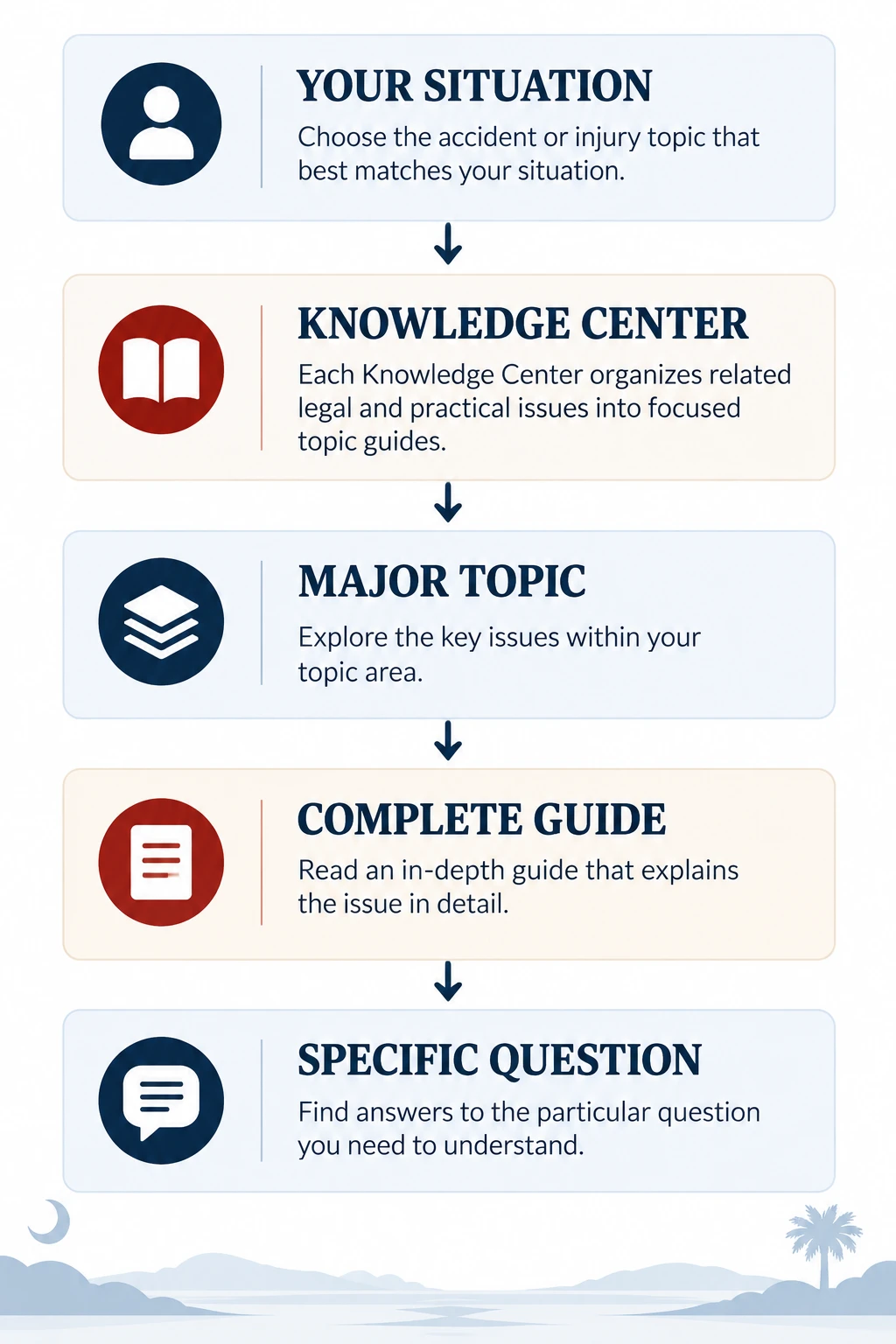
What Medical or Recovery Issue Are You Dealing With?
You do not need to understand every medical or legal issue before you can find the right information. Start with the problem that sounds most like the one you are facing.
I’m still injured months after the accident
Recovery does not happen on the same schedule for everyone. Persistent symptoms, continuing treatment, work restrictions, future medical recommendations, and limitations in everyday activities may all matter when an injury lasts longer than expected.
How Are Medical Bills Paid in a Car Accident Settlement?
Learn how medical bills may be addressed when a car accident claim settles, including outstanding provider balances, health insurance reimbursement claims, liens, and other obligations that may affect the amount ultimately received.
What If I Was Injured as a Passenger in Someone Else's Car?
Learn what may happen when you are injured as a passenger in someone else’s vehicle, including whose insurance may apply, how fault can affect the claim, and what recovery options may need to be considered.
I need to know what medical records matter
Medical records and medical bills serve different purposes. Learn what records may document symptoms, examinations, diagnoses, treatment, restrictions, referrals, and recovery.
I don’t have health insurance
Being injured without health insurance can create difficult questions about where to seek treatment and how medical care may be paid for.
I’m dealing with anxiety, PTSD, or emotional problems
A serious collision may affect more than your physical health. Emotional and psychological symptoms can involve different forms of treatment and documentation.
Can I Get Compensation for Pain and Suffering?
Learn how pain and suffering may be considered as part of a car accident injury claim, including physical pain, emotional effects, inconvenience, and limitations on everyday activities.
How Can Medical Treatment Develop After a Car Accident?
There is no single treatment path that applies to every person or every injury. The appropriate medical decisions should be based on your individual health needs and the recommendations of qualified healthcare providers.
Still, understanding the general progression can help you make sense of the medical information that develops after a collision.
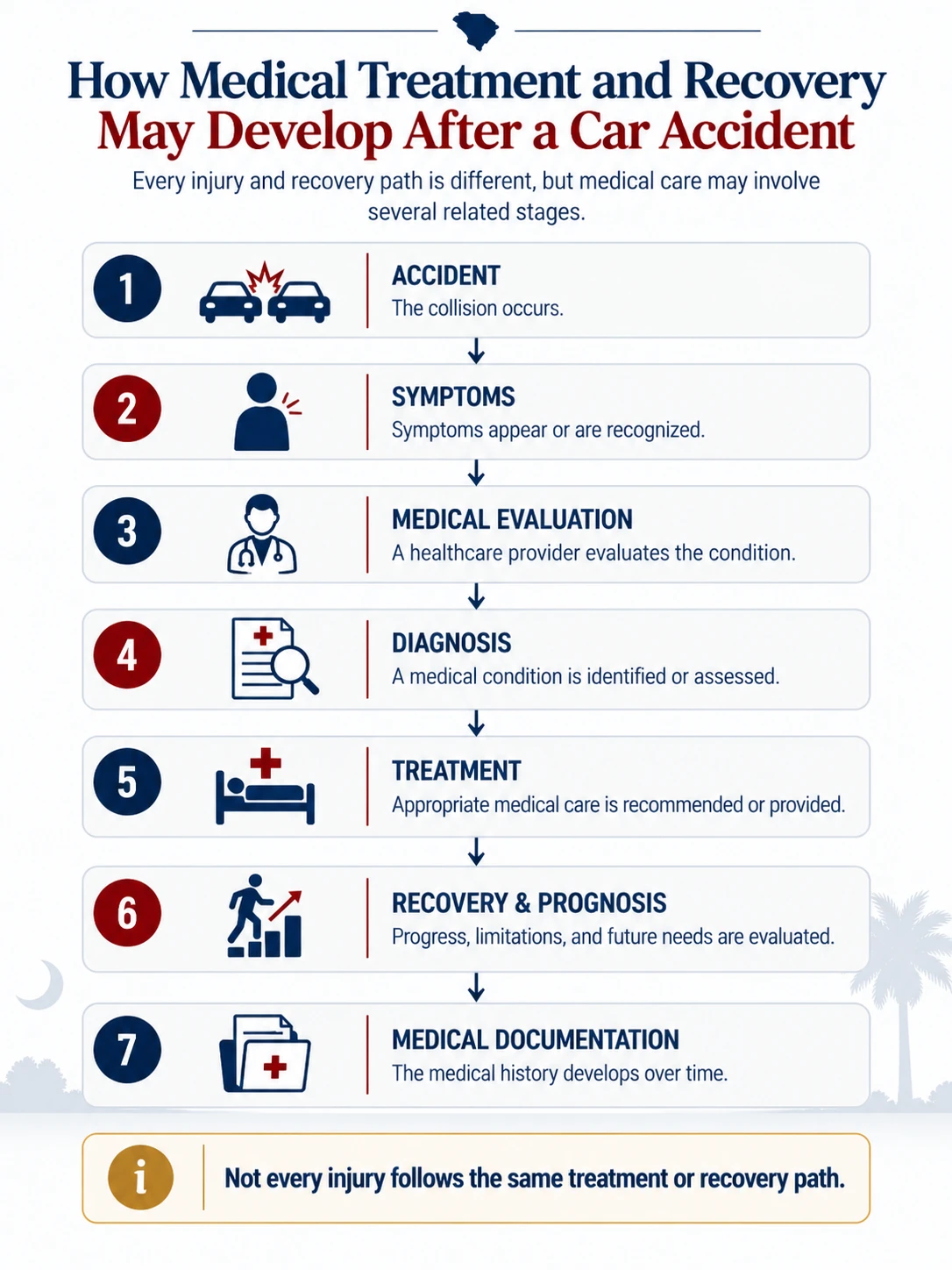
Every injury and recovery path is different, but medical care may involve several related stages.
1. Symptoms Appear or Are Recognized
After a collision, you may immediately recognize pain, limited movement, numbness, dizziness, headaches, or other symptoms. In other situations, symptoms may become noticeable later or change over time.
The timing of symptoms can become part of the medical history. What matters medically should be evaluated by healthcare professionals rather than assumed based only on when discomfort first appeared.
2. Medical Evaluation
A healthcare provider may evaluate your symptoms, medical history, physical examination findings, and other relevant information.
Depending on the circumstances, an evaluation may also involve diagnostic imaging, testing, referrals, or additional medical providers. The type of evaluation that is appropriate depends on the individual patient and suspected injury.
3. Diagnosis
A diagnosis identifies a condition that a medical provider believes explains or relates to the patient’s medical presentation.
A diagnosis is important, but it answers only one part of the medical picture. The existence of a diagnosed condition does not, by itself, establish what caused it.
4. Treatment
Treatment depends on the injury and recommendations of qualified healthcare providers. Depending on the circumstances, care may involve follow-up treatment, therapy, specialists, procedures, rehabilitation, or other medically appropriate care.
The purpose of treatment is health and recovery. Medical decisions should be based on individual medical needs rather than the potential effect on a legal claim.
5. Recovery Is Monitored
Recovery is not always a straight line.
Providers may monitor whether your symptoms are improving, continuing, worsening, or changing. They may also evaluate whether you can return to normal activities, whether restrictions remain necessary, and whether additional treatment is appropriate.
For someone with a more serious injury, the long-term medical picture may take time to become clear.
6. Medical History Is Documented
Medical care creates a history of what happened after the collision.
Records may document reported symptoms, examinations, diagnoses, testing, treatment recommendations, referrals, work restrictions, progress, and prognosis. That history can later become relevant when questions arise about the nature, cause, severity, or duration of an injury.
Four Medical Questions That Can Affect an Injury Claim
Medical treatment can generate a large amount of information. One way to make that information easier to understand is to separate four questions that may arise in an injury claim.
These questions are related, but they are not interchangeable.
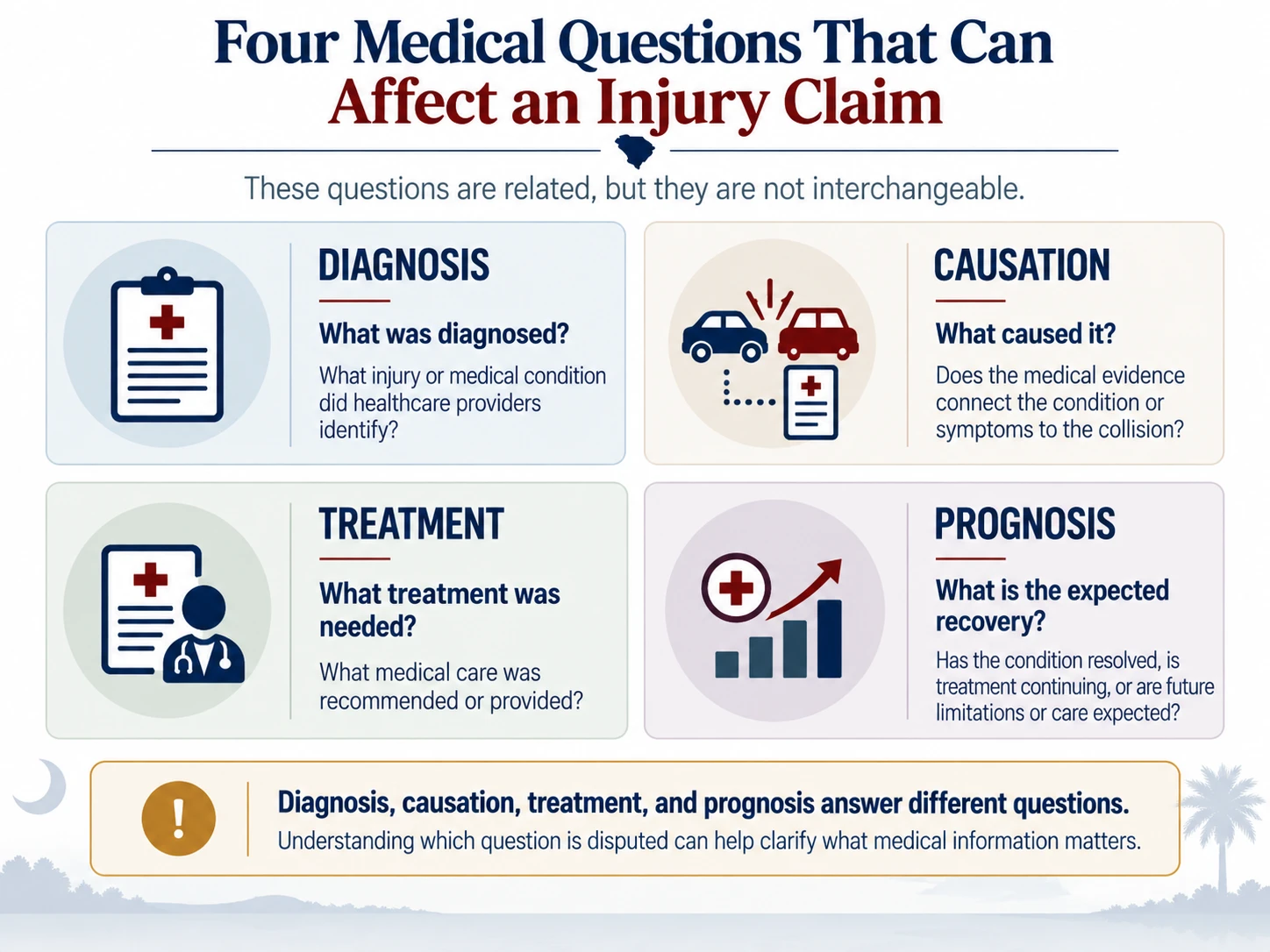
These issues are related, but they are not the same question.
What Was Diagnosed?
What injury or medical condition did healthcare providers identify?
A diagnosis can help explain what medical condition is being treated. Depending on the injury, the medical record may include examination findings, imaging, testing, clinical impressions, referrals, and diagnoses from one or more providers.
What Caused It?
Does the medical evidence connect the condition or symptoms to the collision?
This is a causation question.
Someone may have a diagnosed medical condition without the cause of that condition being undisputed. Prior injuries, preexisting conditions, subsequent events, the timing of symptoms, and medical opinions may become relevant depending on the circumstances.
What Treatment Was Needed?
What medical care was recommended or provided because of the injury?
The treatment history may show how healthcare providers responded to the condition over time. That can include the type of care provided, how long treatment continued, whether referrals were made, and how the patient responded.
What Is the Expected Recovery?
Has the condition resolved, is treatment continuing, or are future symptoms, treatment, or limitations expected?
Prognosis looks forward.
For some injuries, recovery may be relatively quick. Other conditions can involve ongoing symptoms, permanent limitations, additional procedures, future medical care, or uncertainty about how fully someone will recover.
A diagnosis identifies a medical condition. Causation addresses why it occurred. Treatment describes how the condition was addressed. Prognosis concerns what may happen going forward.
Start With Our Complete Medical Treatment and Recovery Guides
If you want to understand the broader medical picture before exploring a specific question, start with these two guides.
Medical Treatment After a South Carolina Car Accident
This guide explains how medical care may develop after a collision and why the treatment history can matter.
Topics include initial medical attention, emergency and follow-up care, diagnostic testing, specialists, physical therapy, referrals, treatment plans, treatment gaps, ongoing care, and future treatment.
Understanding Insurance Claims in South Carolina
This guide explains how car accident insurance claims work in South Carolina, including identifying available coverage, communicating with insurance companies, documenting the claim, evaluating liability and damages, and addressing disputes that may arise during the claims process.
Common Medical and Recovery Questions After a Car Accident
You may not need a complete guide. If you already know the specific problem you are trying to understand, these resources provide a more focused place to start.
Medical Care & Treatment
How Are Medical Bills Paid in a Car Accident Settlement?
Medical bills after a car accident may be handled differently depending on available insurance, outstanding provider balances, liens, and reimbursement obligations. Learn how medical bills may be addressed as part of a settlement and why the total settlement amount can differ from the amount ultimately received.
Can a Lawyer Help If I Don’t Have Health Insurance?
An injury can create a difficult situation when you need medical care but do not have health insurance. This resource explains issues that may arise when trying to obtain and pay for treatment after an accident and where a lawyer may fit into that process.
Symptoms & Injuries
What If I Was Injured as a Passenger in Someone Else’s Car?
If you were injured while riding as a passenger, you may have questions about who was responsible and which insurance coverage may apply. Learn how passenger injury claims can involve the drivers and insurers involved in the collision and what factors may affect your options for recovery.
What If I’m Still Injured Months After the Accident?
Some injuries take longer to improve than expected, and some people continue experiencing symptoms or limitations after months of treatment. This resource explains issues involving continuing care, persistent symptoms, work restrictions, future medical recommendations, and the importance of understanding the medical picture before resolving an injury claim.
Medical Documentation
What Medical Records Do I Need for My South Carolina Accident Claim?
Medical bills can show what was charged. Medical records can show what happened clinically. Learn about records that may document symptoms, examinations, diagnoses, testing, treatment, referrals, restrictions, and recovery.
Emotional & Long-Term Recovery
Can I Sue for Emotional Distress After a Car Accident?
A collision can have psychological as well as physical effects. This resource explains how anxiety, trauma-related symptoms, emotional distress, treatment, and supporting evidence may become relevant in a South Carolina car accident injury claim.
Can I Get Compensation for Pain and Suffering?
Learn how pain and suffering may be considered in a car accident claim, including physical pain, emotional effects, inconvenience, and changes to your daily activities or quality of life.
Important Medical and Injury Claim Distinctions
Some medical concepts sound similar but answer very different questions. Understanding the distinctions can make the medical side of an injury claim easier to follow.
Symptoms ≠ Diagnosis
Symptoms are what you experience or report. A diagnosis is a medical provider’s identification or assessment of a condition.
Diagnosis ≠ Causation
A diagnosis identifies a condition. It does not, standing alone, determine what caused that condition.
Treatment ≠ Recovery
Receiving medical treatment does not necessarily mean an injury has resolved. Treatment may continue while symptoms or limitations remain.
Recovery ≠ No Future Effects
Improvement does not always mean every symptom, restriction, or future medical need has ended.
Medical Records ≠ Medical Bills
Medical records generally document clinical information about care. Medical bills generally document charges associated with that care.
Treatment Gap ≠ Automatic End of a Claim
A period without medical treatment may raise questions, but it does not by itself answer why treatment stopped or what effect the gap has on a particular claim.
Physical Injury ≠ Emotional Injury
Physical and psychological effects may both arise after a collision, but they may involve different symptoms, providers, treatment, and evidence.
Medical Treatment and Medical Evidence Are Related, but Not the Same
The primary purpose of medical treatment is healthcare, not creating evidence for a legal claim.
You should not choose medical treatment simply because you think it will make a claim stronger. Medical decisions belong between you and qualified healthcare providers and should be based on your individual medical needs.
At the same time, treatment can create records that later help explain what happened medically after the collision.
Treatment may create records documenting:
- Symptoms and clinical findings
- Diagnoses and treatment recommendations
- Restrictions and response to treatment
- Recovery, prognosis, and future-care recommendations
That distinction matters. Receiving medical care and proving a legal claim are not the same process, even though information created during medical care may later become relevant evidence.
For a deeper discussion, see What Medical Records Do I Need for My South Carolina Accident Claim? →
What If There Is a Gap in Medical Treatment?
Gaps in treatment can occur for many reasons, including improvement in symptoms, scheduling difficulties, transportation problems, financial or insurance issues, work or family responsibilities, or changes in providers.
A gap may raise questions about what happened medically during that period, but it should not be treated as an automatic conclusion about an injury or claim. The reason for the gap and the surrounding medical history matter.
If questions arise, accuracy is important. Explain what actually happened rather than assuming what the gap means.
What If You Had a Medical Condition Before the Accident?
A prior injury or medical condition does not, by itself, answer what happened in a later collision. Depending on the circumstances, the relevant question may be whether the accident caused a new condition or affected an existing one.
Symptoms before and after the accident, prior treatment, diagnostic findings, subsequent treatment, and medical opinions may become relevant when causation is disputed.
Accuracy matters. A preexisting condition should not be hidden, but its existence does not automatically explain every symptom experienced after a later accident.
For more about causation and supporting evidence, visit Evidence, Liability & Case Strength →
What Medical Information Can Matter After a Car Accident?
Different kinds of medical information can answer different questions. No single record necessarily tells the entire story.
Symptoms & Complaints
Medical records may document pain, numbness, headaches, dizziness, weakness, emotional symptoms, restricted movement, sleep problems, or other complaints reported during care. The consistency and development of those complaints over time may become relevant to understanding the medical history.
Examination & Diagnostic Findings
Providers may document physical examination findings, imaging, laboratory or diagnostic testing, clinical observations, and other information used to evaluate a condition. These findings can help explain how providers reached a diagnosis or made treatment decisions.
Treatment History
The treatment history may identify providers, appointments, therapy, medication, procedures, referrals, restrictions, and recommendations for additional care. It can also show how treatment changed as providers monitored the patient’s condition.
Recovery & Limitations
Medical information may document whether symptoms improved, whether restrictions continued, whether someone could return to work or activities, and whether additional treatment or long-term limitations were expected. These issues can become particularly important when an injury has not fully resolved.
Medical information may help answer questions about diagnosis, causation, treatment, recovery, and damages. Other evidence may also be necessary depending on what is actually disputed.
Gary's Take: The Medical Story Should Make Sense From Beginning to End
“When I evaluate the medical side of an injury case, I don’t just look at the total amount of the medical bills. I want to understand the story the medical history tells from the day of the accident forward.”
“What symptoms did the client have? When did they seek care? What did the doctors find? What was diagnosed? What treatment was recommended? Did the treatment help? Are there still problems or limitations? If there was a gap in treatment or a prior medical condition, what actually happened?”
“The goal isn’t to make the medical history look perfect. Real people don’t always recover in a perfectly straight line. The goal is to understand the medical evidence accurately and be able to explain what happened from the collision through treatment and recovery,” says Gary Christmas.
Related South Carolina Car Accident Topics
Medical treatment and recovery are only part of the larger car accident picture. Depending on the issue you are trying to solve, one of these Knowledge Center sections may be the better next step.
| If You're Trying to Understand… | Start Here |
|---|---|
| The insurance claim, adjuster, or coverage | Insurance & Claims → |
| Your injuries, symptoms, or medical treatment | Medical Treatment, Injuries & Recovery → |
| Who was at fault or what evidence matters | Evidence, Liability & Case Strength → |
| What losses may be recoverable or how settlement works | Settlement Value & Financial Recovery → |
| What happens if the dispute goes to court | Lawsuits & Litigation → |
| Whether, when, or how to hire an attorney | Hiring a Lawyer & Legal Strategy → |
Questions About Medical Treatment or Injuries After a South Carolina Car Accident?
You may be able to handle many medical and insurance issues without legal representation. Other situations become more complicated, particularly when the medical picture is still developing.
Speaking with a South Carolina injury lawyer may be useful when:
- Your injuries are significant or continuing.
- Several doctors or specialists are involved.
- You are having difficulty obtaining or paying for appropriate medical care.
- The insurer disputes whether the accident caused your injuries.
- You had a preexisting condition that has become an issue.
- Your doctor expects continuing treatment or long-term limitations.
- Your injury is affecting your ability to work or perform normal activities.
- An insurer is asking you to resolve the claim while treatment or recovery is still developing.
Christmas Injury Lawyers represents injured people throughout South Carolina. The firm’s approach is to help clients understand the insurance and legal issues surrounding their claims while they focus on their medical treatment and recovery.
If you have questions about how your injuries, treatment, or recovery may affect a South Carolina car accident claim, you can contact Christmas Injury Lawyers to discuss your situation.